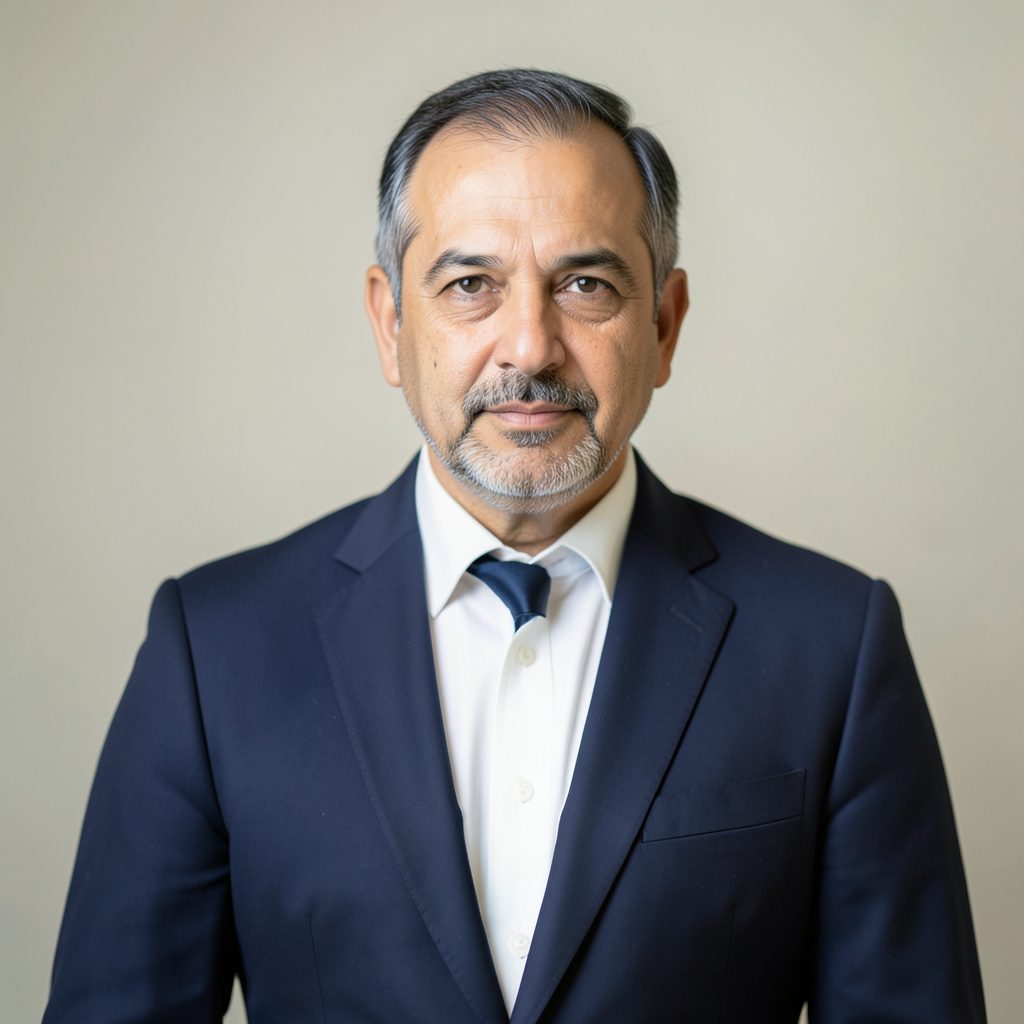
Prof. Dr. M. Din Syamsuddin
Muhammadiyah leadership, interfaith dialogue and public statements.
This site brings together the biography, news, and media of Prof. Dr. M. Din Syamsuddin, who led Muhammadiyah from 2005 to 2015 and later served the Indonesian Council of Ulama (MUI) and its Advisory Council. It gathers his statements on interfaith relations and his work with regional and international peace bodies.

Roles and Activities
A Career in Religious and Civic Leadership
Prof. Dr. M. Din Syamsuddin served as President of Muhammadiyah from 2005 to 2015, and led the Indonesian Council of Ulama (MUI) during 2014-2015 before chairing its Advisory Council from 2015 to 2020. He holds the position of President-Moderator of the Asian Conference of Religions for Peace (ACRP) and chairs the Center for Dialogue and Cooperation among Civilizations (CDCC).
In November 2017 he was appointed Special Envoy by President Jokowi. He has represented Indonesian Islamic perspectives at international gatherings, including a Vatican conference on climate change in July 2015 and a forest preservation initiative launched in Oslo in June 2017, and he received an Honorary Doctorate from Fatoni University, Thailand.
Recent Statements and Activities
Prof. Dr. M. Din Syamsuddin reflects on the unifying power of shared worship in his latest piece. Read his insights in Why Interfaith Prayer Services Matter For Peace. News coverage on this site traces public statements and appointments from recent years: the November 2017 appointment as Special Envoy, September 2017 remarks on Islamophobia and religious freedom discussed in Germany and New York, participation in the Oslo forest preservation initiative in June 2017, and an appeal in December 2016 for the OIC to convene on the Rohingya crisis.
Earlier statements include comments on minority rights, religious tolerance toward the LGBT community, and condemnation of the November 2015 Paris attacks. Full articles are listed in the news section.
A personal website often serves as a quiet archive of a lifetime of work, gathering the threads of biography, public service, and thought into one place. The design here uses a warm, off-white background paired with deep charcoal text, lending the space an editorial calm rather than a corporate tone. Generous spacing and a single reading column invite visitors to linger on each section, while serif headlines add a sense of literary weight to the prose. The overall atmosphere feels less like a product page and more like a thoughtful letter, with content given room to breathe and the typography doing much of the emotional work of the layout.
At the heart of the site is a figure whose career spans religious leadership, civic duty, and dialogue between communities. The pages trace a path through long-standing involvement with major Indonesian organizations, including a prominent role in one of the country's largest faith-based movements, followed by contributions to national bodies concerned with clerical affairs and ethical guidance. The narrative emphasizes continuity: a steady commitment to public responsibility, to the institutions that shape moral life, and to the conversations that hold a plural society together. Visitors are invited to read this as a portrait of service rather than as a résumé, with the quieter values of patience and reflection shaping the tone.
The site also documents a body of public statements issued over many years, addressing issues that range from national policy to questions of conscience. These statements are presented as part of an archive, allowing readers to follow how positions were developed, refined, or revisited in light of changing circumstances. Rather than presenting only polished conclusions, the collection offers context, acknowledging that public speech is a process shaped by dialogue and by the gravity of the moments that call for it. The editorial framing keeps the focus on the reasoning behind the words, encouraging readers to engage with the underlying concerns rather than with partisan reaction.
Interfaith dialogue is given its own quiet prominence, reflecting decades of work with regional and international forums dedicated to peace and mutual understanding. The pages describe participation in councils and networks that bring together religious leaders from diverse backgrounds, focusing on shared challenges such as social harmony, education, and the moral dimensions of public life. Photographs and short accounts convey the texture of these encounters, from formal meetings to more informal exchanges. The aim is to present dialogue not as a single event but as an ongoing practice, requiring patience, listening, and a willingness to recognize the humanity in every interlocutor, regardless of creed or tradition.
Alongside institutional work, the site acknowledges a parallel engagement with civic and intellectual communities. This includes connections with scholars, writers, and educators, as well as participation in conferences and seminars that examine the role of religion in modern society. The tone is one of steady curiosity rather than polemic, suggesting that ideas are best developed through conversation and rigorous exchange. Readers will find references to collaborative writing, public lectures, and contributions to collective volumes, all of which point to a career shaped as much by listening and learning as by formal leadership. The cumulative impression is of a life oriented toward shared inquiry.
The visual presentation reflects the seriousness of the subject without becoming austere. Photographs appear in clean rectangular frames without heavy filters, allowing the reader to engage directly with the people and moments depicted. A muted plum accent is used sparingly across icons and small details, while a single touch of red draws attention where contrast serves the narrative. Hairline borders separate sections in place of bold lines, and the buttons are outlined rather than filled, echoing the preference for suggestion over declaration. Together, these choices create a visual rhythm that supports the written content rather than competing with it, keeping the focus on people, ideas, and the slow accumulation of a public life.
For visitors arriving through search or through word of mouth, the site functions as both introduction and reference. Those encountering the subject for the first time will find a concise overview of the major phases of the work, while returning readers can use it as a gateway to more detailed statements, press coverage, and media archives. The structure anticipates a range of audiences, including journalists, fellow scholars, community members, and younger generations seeking to understand a long arc of public engagement. By keeping navigation simple and language accessible, the site ensures that the substance of the work remains accessible to anyone curious enough to spend time with it.
Underpinning the entire site is a quiet attention to copyright, rights, privacy, and policy, framed with the same care given to the visible content. These considerations reflect an awareness that a public archive carries responsibilities toward subjects, contributors, and readers alike. Permissions, attributions, and limitations on reuse are handled with respect for both legal norms and personal dignity. Visitors are invited to engage with the material thoughtfully, recognizing that the words and images gathered here belong to a continuing story rather than to a fixed monument. The closing notes thus extend the same spirit of care and consideration that defines the rest of the site.
Photo, Video and Downloads
The photo gallery documents public appearances, meetings and events, including images from his tenure as Muhammadiyah President and from international conferences. The video section holds recordings of speeches and interviews on interfaith dialogue and religious tolerance. The download section offers official statements and related materials.